
Cattle Health Monitoring: Choosing SIM, BLE, LoRa Connectivity
Running a successful livestock operation today relies on smart tools. Keeping an eye on your cattle\'s health means using technology to get real-time insights, helping you spot issues early and improve animal welfare. This leads to better decisions for your farm and healthier animals.
\nChoosing the right system for animal health sensors can be complex. You\'ll often hear about SIM (Cellular IoT), Bluetooth Low Energy (BLE), and LoRaWAN for connectivity. Each option has its own strengths, and what works for one farm might not work for another.
\nThis guide will help you understand these technologies. We\'ll compare them based on what truly matters: your farm\'s unique setup and your long-term operational needs. By the end, you\'ll be ready to make an informed choice for your cattle health monitoring technology.
\nUnderstanding Your Farm\'s Unique Needs: The Foundation of Tech Choice
\n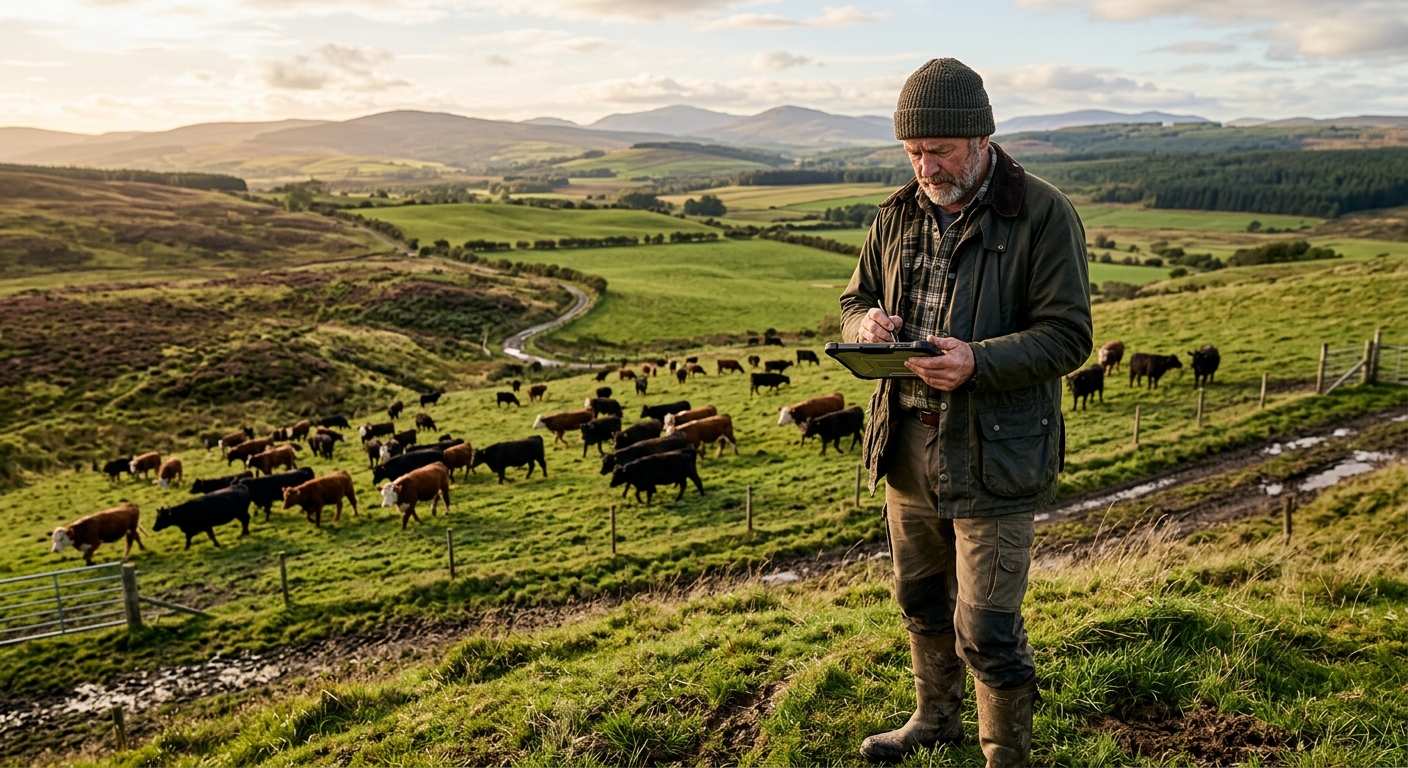 \n
\nBefore you choose any specific technology, you must first understand your own farm. Every operation is unique, and the best cattle health monitoring technology will depend entirely on your specific conditions and goals.
\nAssess Farm Size, Terrain, and Animal Movement Patterns
\nConsider the size of your farm and its physical landscape. Do your cattle roam across vast, open pastures, or are there hills, valleys, or dense tree lines? These features directly impact how far a signal can travel and the coverage you\'ll need. If your animals move over large distances, a long-range solution is essential. For smaller, enclosed areas, a shorter-range option might be more practical. Think about how freely your animals move and where they spend most of their time to determine the necessary reach and reliability for your animal health sensors.
\nEvaluate Existing Infrastructure, Network Availability, and Power Sources
\nNext, take stock of your current setup. Do you have reliable cellular service across your entire property? Is Wi-Fi available in key areas like barns? The presence or absence of these existing networks heavily influences your connectivity choice. Also, consider power availability. Are there readily accessible power sources for gateways, or will your devices rely solely on batteries? Some smart farm technology might need mains power, while other livestock monitoring solutions are designed for remote, off-grid use. Your existing infrastructure can make some technologies far easier to implement than others.
\nDetermine the Volume, Frequency, and Criticality of Data Needed
\nWhat kind of information do you need, and how often? Are you looking for daily summaries of activity, or do you require constant, real-time alerts about individual animal health? The amount of data you\'ll send (volume), how often it needs to be sent (frequency), and how important it is to get it instantly (criticality) are crucial factors. For example, a system monitoring calving alerts needs immediate, reliable data. In contrast, a system tracking long-term weight trends can handle less frequent updates. Understanding your data requirements helps you choose a technology that can handle the load efficiently, supporting precision livestock farming.
\nTechnical Deep Dive: SIM, BLE, and LoRa for Livestock Monitoring
\n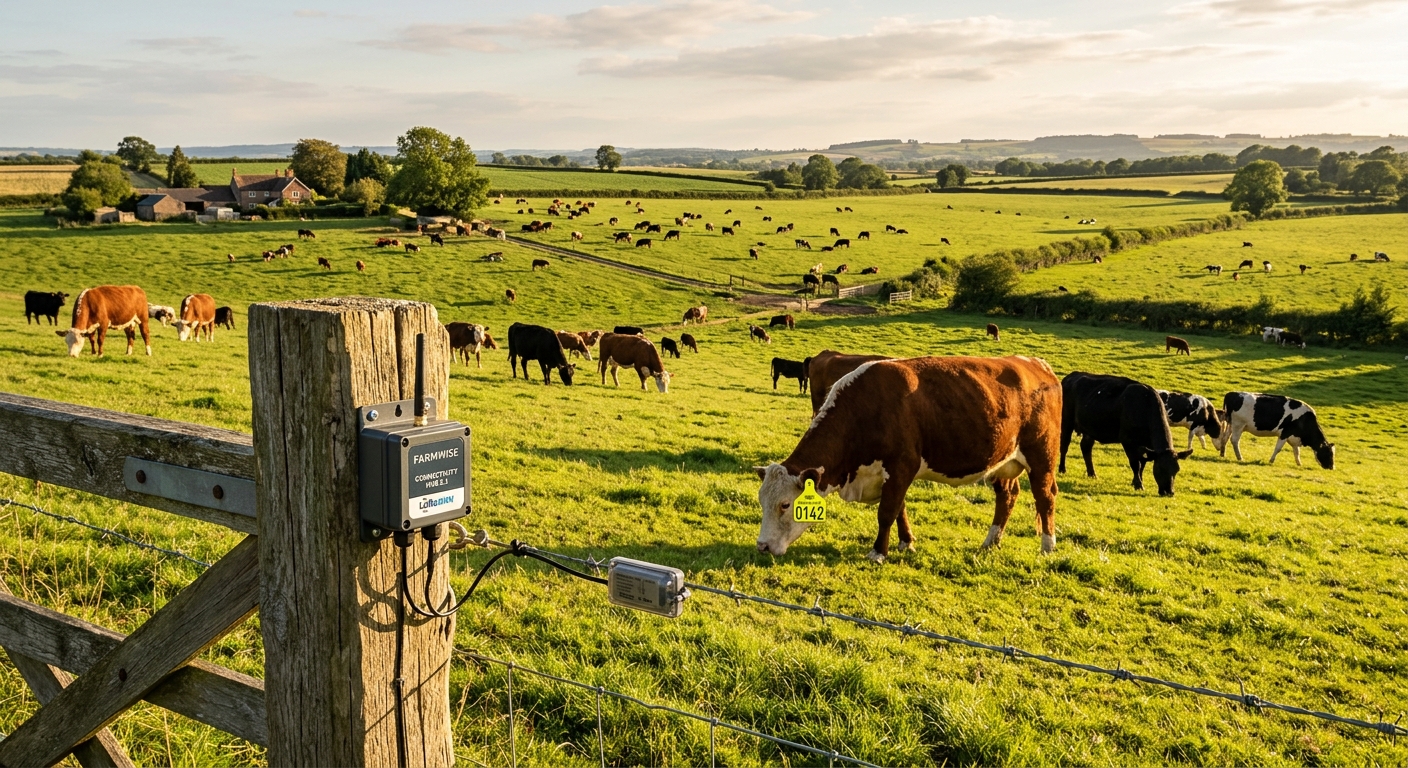 \n
\nWith your farm\'s needs in mind, let\'s explore the technical details of SIM (Cellular IoT), Bluetooth Low Energy (BLE), and LoRaWAN. Each of these cattle health monitoring technologies offers distinct features, making them suitable for different scenarios.
\nCompare Range, Power Consumption, Data Rate, and Cost Implications
\nSIM (Cellular IoT) solutions use public cellular networks. They offer very long range wherever cellular coverage exists, making them ideal for large, sprawling farms. Power consumption is moderate, with newer standards like NB-IoT being more efficient but generally higher than BLE or LoRaWAN. Cellular networks support moderate to high data rates, suitable for detailed sensor readings. However, operational costs are typically higher due to monthly data subscriptions per device, adding to the overall cost of cellular IoT livestock deployments.
\nBluetooth Low Energy (BLE) is a short-range technology, usually up to 100 meters in open air. It\'s perfect for confined spaces like barns or feedlots. BLE boasts very low power consumption, allowing devices to run on small batteries for months or years. It offers moderate data rates for localized data collection. Hardware costs are low, and there are no cellular subscriptions, but covering a large area requires many gateways, increasing initial setup costs for these animal health sensors.
\nLoRaWAN (Long Range Wide Area Network) is designed for long-range, low-power communication, often reaching several kilometers in rural areas. This makes it a strong choice for large, remote farms. LoRaWAN devices are incredibly power-efficient, with batteries lasting for years. However, its data rate is low, best suited for small, infrequent data packets like temperature or activity levels. Initial costs involve setting up LoRaWAN gateways, but operational costs are low without per-device cellular subscriptions, making it a cost-effective LoRaWAN cattle monitoring solution.
\nAnalyze Strengths and Weaknesses Regarding Reliability, Security, and Deployment Complexity
\nSIM (Cellular IoT) offers high reliability in areas with strong cellular coverage and leverages built-in cellular network security. Deployment is relatively simple if coverage is good. Its main weaknesses are potential coverage gaps in remote areas, higher ongoing costs, and dependence on third-party network providers. It\'s a robust smart farm technology where coverage is guaranteed.
\nBluetooth Low Energy (BLE) provides extremely low power consumption and low device cost, making it good for high-density, localized monitoring with strong point-to-point security. Its significant weakness is very limited range, demanding numerous gateways for wider coverage. It\'s not suitable for animals roaming freely over large distances, as data collection relies on proximity to a gateway.
\nLoRaWAN excels in long range and low power consumption, perfect for remote livestock monitoring solutions. It allows for private network deployment, giving you full data control, and is cost-effective for large-scale deployments once gateways are in place. Its weaknesses include a low data rate, unsuitable for continuous, high-volume data streams, and the need to set up your own gateway infrastructure, adding initial deployment complexity.
\nUnderstand the Specific Hardware Requirements and Potential for Integration with Existing Farm Management Systems
\nEach technology requires specific hardware. SIM solutions need devices with cellular modems and SIM cards. BLE systems use small tags on animals and nearby BLE gateways. LoRaWAN needs LoRa-enabled sensors and strategically placed LoRaWAN gateways.
\nIntegration is vital for any precision livestock farming setup. All three can integrate with cloud-based farm management systems. Cellular IoT often sends data directly to the cloud. BLE data is usually collected by a gateway, then sent to the cloud via Wi-Fi or cellular. LoRaWAN gateways aggregate sensor data, forwarding it to a network server that connects to your farm management software. Look for solutions with open APIs or established connectors to your existing systems to ensure smooth data flow and avoid silos.
\nMaking the Informed Decision: Implementation and Future-Proofing
\n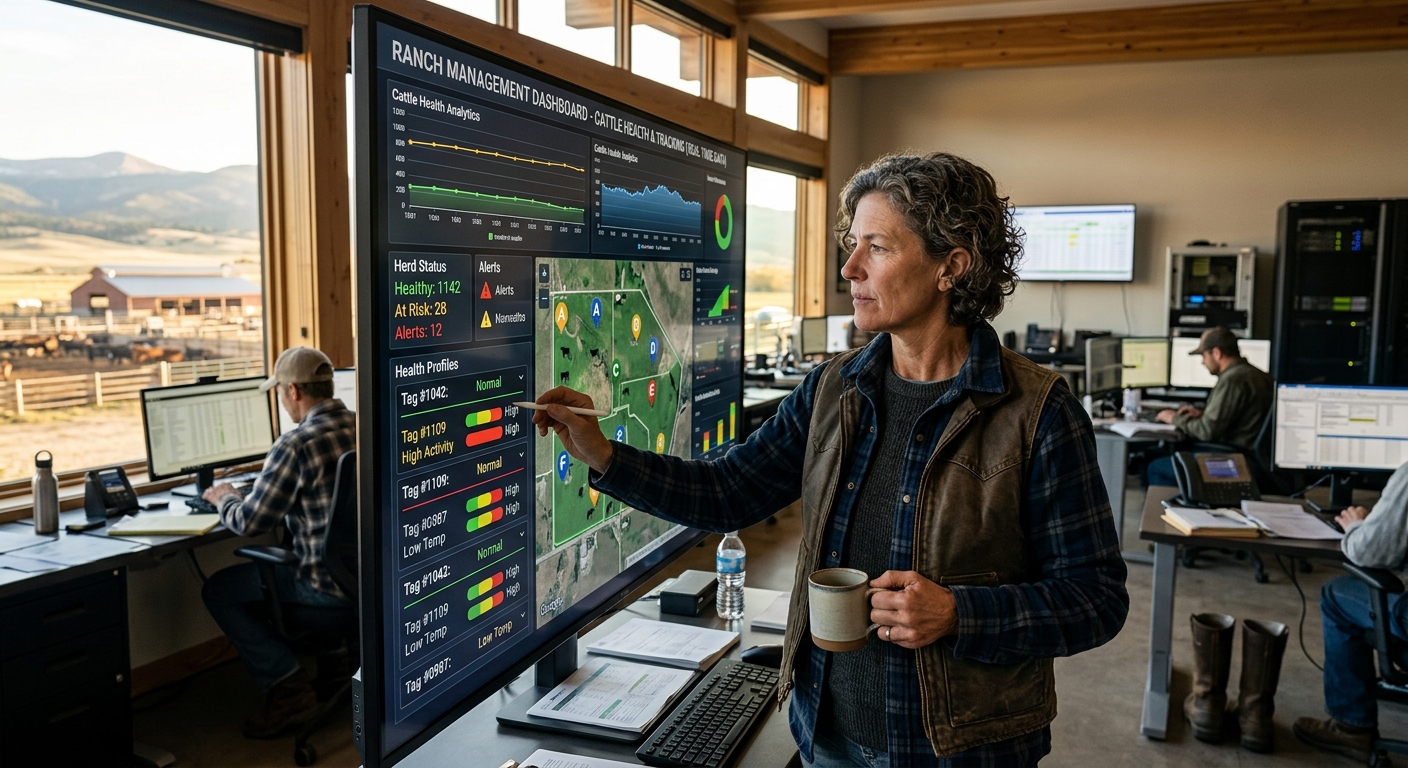 \n
\nChoosing the right cattle health monitoring technology is a strategic decision that impacts your farm\'s efficiency and profitability for years. After analyzing your needs and understanding the technical options, it\'s time to make an informed choice and plan for the long term.
\nConduct a Comprehensive Cost-Benefit Analysis
\nDon\'t just look at the initial price tag. A complete cost-benefit analysis for livestock monitoring solutions must consider both initial investment and ongoing operational costs. Initial costs include animal health sensors, gateways, installation, and software. LoRaWAN might have higher upfront costs for gateways, while BLE tags are very inexpensive. Cellular IoT devices can be pricier, but may require fewer gateways. Operational costs involve monthly data plans for SIM solutions, battery replacement frequency, and ongoing software or maintenance fees. LoRaWAN often has lower operational costs after setup due to no per-device data charges. Weigh these costs against benefits like early disease detection, reduced veterinary bills, improved breeding, and optimized feeding, all of which boost farm output and animal welfare.
\nPlan for Scalability and Future Expansion
\nYour farm might grow, or your monitoring needs could change. The cattle health monitoring technology you choose today should be able to adapt. Can the system easily handle more animals or sensors without a complete overhaul? Cellular IoT is inherently scalable as long as coverage exists; you simply add more SIMs. LoRaWAN scales well by adding more sensors to existing gateways or deploying additional gateways. BLE, however, might face challenges with scalability over large areas, potentially requiring an increasing number of gateways as your herd expands. Investing in smart farm technology that is flexible and adaptable will save you time and money in the long run.
\nConsider the Importance of Data Control, System Integration, and Expert Support for Long-Term Success
\nFinally, think about the broader ecosystem of your chosen technology. Who owns your data, and where is it stored? Private LoRaWAN networks offer more control over data flow. Cellular IoT relies on network providers and cloud services, which have their own data policies. Understanding data ownership and privacy is crucial for precision livestock farming. How well does the system integrate with your existing farm management software or other smart farm tools? A solution that works smoothly with your current operations prevents headaches and makes your data more valuable. Look for open APIs or established partnerships. Lastly, even the best technology needs support. Is reliable technical assistance available for installation, troubleshooting, and maintenance? Choosing a provider with strong support for their livestock monitoring solutions makes a huge difference in the long-term success of your system.
\nKey Takeaways
\n- \n
- Prioritize Farm Needs First: Always begin by assessing your farm\'s specific size, terrain, animal movement, existing infrastructure, and detailed data requirements. \n
- Match Technology to Range & Power: Select SIM for vast areas with cellular coverage, BLE for close-range, high-density monitoring, and LoRaWAN for long-range, low-power data over remote properties. \n
- Factor in All Costs: Account for both initial hardware investment and ongoing operational expenses like data plans and battery replacements for a complete financial picture. \n
- Plan for Growth: Choose cattle health monitoring technology that can easily scale with your herd size and adapt to future monitoring needs without major overhauls. \n
- Ensure Data Control & Integration: Prioritize solutions offering clear data ownership, smooth integration with existing farm management systems, and reliable expert support. \n
- Evaluate Reliability and Security: Understand the inherent reliability and security features of each connectivity type within your specific farm environment. \n
Conclusion
\nChoosing the right cattle health monitoring technology—whether SIM, BLE, or LoRaWAN—is a strategic decision that significantly impacts your farm\'s efficiency and your animals\' well-being. The goal isn\'t to pick the most advanced option, but the solution that best fits your unique operational landscape, budget, and long-term goals. By carefully considering your farm\'s specific conditions, understanding the technical nuances of each connectivity type, and planning for future scalability and support, you can implement a smart farm technology system that truly makes a difference.
\nReady to explore how advanced IoT solutions can transform your livestock operation? Our experts at BluePixel Technologies specialize in smart connectivity and innovative software, helping you design and implement the perfect precision livestock farming system tailored to your needs. Visit us at https://www.bluepixeltech.com/ to learn more about how we can help you make the best technology choices for your farm\'s success.
\n